
What Is Cognitive Remedial Development?
No two children take in the world the same way. One child might lose the thread halfway through a set of instructions; another might understand a story perfectly well but struggle to put it into words quickly enough. Cognitive Remedial Development starts from a simple belief: these aren’t failures of effort or character. They’re signs that a particular way of thinking hasn’t yet had the chance to mature — and with the right kind of support, it can.
What It Means
Cognitive Remedial Development is a one-to-one, developmentally-informed practice that nurtures the mental foundations a child draws on in everything they do — not the specific subject in front of them, but the underlying ways of thinking that make learning possible at all. Where academic support helps a child master a topic, this work helps a child grow more at ease with the process of thinking itself: taking things in, making sense of them, holding onto them, and using them.
A helpful way to picture it: teaching a child their times tables gives them an answer. Helping a child feel steadier holding several ideas in mind at once, or organizing their thoughts before speaking, changes how they approach every subject that follows — and every conversation, instruction, and problem they’ll meet outside the classroom too.
This isn’t a fixed idea of ability. Child development has long shown that the mind continues to mature in response to consistent, attuned support — the same principle behind any developmental milestone, from learning to read to learning to reason.

What We Pay Attention To
Instead of treating a child’s mind as one undifferentiated thing to “fix,” this work looks closely at the distinct, everyday ways a child engages with information:
- Sustained Attention — staying with a task and shifting attention when needed
- Mental Holding Power — holding several pieces of information in mind long enough to use them
- Retention & Recall — taking things in so they can be brought back to mind with confidence later
- Response Speed — moving through information at a comfortable speed, without feeling rushed or lost
- Problem-Solving & Reasoning — noticing patterns and working through something new
- Visual-Spatial Understanding — making sense of what's seen — shapes, space, visual detail
- Auditory & Language Processing — making sense of what's heard — sounds, spoken language, instructions
A struggle in any one of these can easily be mistaken for laziness, poor behavior, or a subject-specific weakness — when really, it’s an area of development that hasn’t yet caught up to what’s being asked of the child.
Where It Sits, Compared to Other Support
Academic tutoring helps a child understand a subject better. Talk-based therapy supports a child’s emotional and relational world. Cognitive Remedial Development sits underneath both — tending to the mental groundwork a child needs in order to make use of either kind of support in the first place. It doesn’t compete with tutoring or therapy; it often makes both more effective.
What Time Together Looks Like
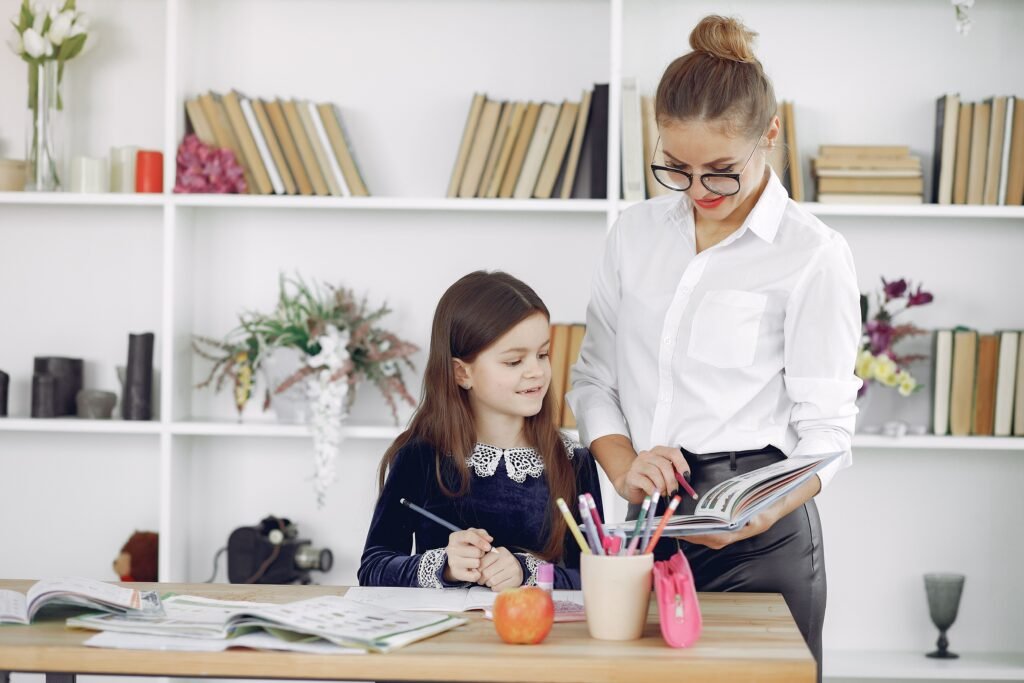
Sessions are unhurried, individual, and built around a relationship with a practitioner who gets to know how a particular child thinks. Activities are chosen to feel natural and age-appropriate, and expectations are raised gently and only as a child grows more comfortable — the aim is steady confidence, not pressure. Families are kept close to what’s happening along the way, so progress is felt at home too, not just observed in a session.
The Shape of the Journey
Our program takes shape around each child rather than a fixed template — the number of sessions, their length, and how often we meet are all decided together, based on what a particular child needs and how they’re settling in. Every session opens with a short, movement-based settling-in period — simple, cross-body movement that helps a child arrive calm and ready before any thinking work begins.
However long the journey runs, it tends to move through three natural phases:
- Getting Our Bearings — the early sessions, where we come to understand how a child currently thinks, learns, and copes, and begin gently building comfort with the areas that need it most
- Building Steadily — the middle stretch, where skills are woven together rather than worked on in isolation, mirroring how thinking actually happens in real life
- Bringing It Together — the final sessions, where everything learned is drawn into more complex, real-world-like moments, so a child leaves not just improved at exercises, but genuinely more capable day to day
Throughout, we check in — quietly comparing where a child started to where they are now — so families have something real to see, not just a sense that things “feel a bit better.”

Who Tends to Seek This Out
Families often reach out when a child:
- Loses track partway through instructions with several steps
- Reads or writes with more effort than seems to match their understanding
- Has trouble holding onto information long enough to act on it
- Has attention that comes easily in some settings and not others
- Seems more capable than their schoolwork currently reflects
- Feels overwhelmed in noisy, busy, or fast-moving environments
None of this requires a diagnosis or a label to begin. It simply requires noticing that a child could be supported in a more foundational way.
The Belief Behind the Work
At the center of this approach is a simple, hopeful conviction: a child’s mind is still forming, not finished. Memory, attention, and reasoning aren’t fixed traits a child is stuck with — they’re capacities still very much in motion, shaped by the support, patience, and relationships around a child.
The goal isn’t to ask a child to push harder against the same limits. It’s to help those limits gently move — so a child leaves not just better equipped for this year’s classroom, but steadier in how they meet whatever comes next.